%22%2F%3E%0A%20%20%20%20%20%20%3Cstop%20offset%3D%22100%25%22%20stop-color%3D%22hsl(23%2073%25%2023%25)%22%2F%3E%0A%20%20%20%20%3C%2FlinearGradient%3E%0A%20%20%20%20%3CradialGradient%20id%3D%22wash%22%20cx%3D%2250%25%22%20cy%3D%2250%25%22%20r%3D%2250%25%22%3E%0A%20%20%20%20%20%20%3Cstop%20offset%3D%220%25%22%20stop-color%3D%22hsl(175%2075%25%2050%25)%22%20stop-opacity%3D%220.95%22%2F%3E%0A%20%20%20%20%20%20%3Cstop%20offset%3D%22100%25%22%20stop-color%3D%22hsl(175%2075%25%2050%25)%22%20stop-opacity%3D%220%22%2F%3E%0A%20%20%20%20%3C%2FradialGradient%3E%0A%20%20%20%20%3Cpattern%20id%3D%22stripes%22%20width%3D%2261%22%20height%3D%2261%22%20patternUnits%3D%22userSpaceOnUse%22%20patternTransform%3D%22rotate(10)%22%3E%0A%20%20%20%20%20%20%3Cpath%20d%3D%22M%200%2030%20L%2061%2030%22%20stroke%3D%22white%22%20stroke-opacity%3D%220.09%22%20stroke-width%3D%221.8%22%2F%3E%0A%20%20%20%20%3C%2Fpattern%3E%0A%20%20%3C%2Fdefs%3E%0A%0A%20%20%3Crect%20width%3D%221600%22%20height%3D%22900%22%20fill%3D%22url(%23bg)%22%2F%3E%0A%20%20%3Crect%20width%3D%221600%22%20height%3D%22900%22%20fill%3D%22url(%23wash)%22%20opacity%3D%220.28%22%2F%3E%0A%20%20%3Crect%20width%3D%221600%22%20height%3D%22900%22%20fill%3D%22url(%23stripes)%22%2F%3E%0A%0A%20%20%3Cg%20fill%3D%22none%22%20stroke%3D%22white%22%20stroke-opacity%3D%220.10%22%3E%0A%20%20%20%20%3Cpath%20d%3D%22M%200%20739%20C%20260%20569%2C%20570%20909%2C%20840%20739%20S%201300%20569%2C%201600%20739%22%20stroke-width%3D%222%22%2F%3E%0A%20%20%20%20%3Cpath%20d%3D%22M%200%20807%20C%20220%20642%2C%20610%20972%2C%20910%20807%20S%201320%20642%2C%201600%20807%22%20stroke-width%3D%222%22%2F%3E%0A%20%20%3C%2Fg%3E%0A%3C%2Fsvg%3E)
Agile organizational development in an international IT company
Jun 19, 2024Jun 21, 2026
There are assignments that are completed after a few weeks. And there are initiatives that shape an organization for years. “Agile Organizational Development” was the latter: a transformation process in a medium-sized IT service provider with several locations, which I had the privilege of accompanying as an Agile Coach and organizational developer over several years.
The starting point: Making organizational debt visible
In spring 2017, a company-wide cultural change program brought an uncomfortable realization: The company was suffering from a whole range of “organizational debt,” that is, evolved structures and habits that were slowing the organization down.
To systematically uncover this debt, a full-day cultural change workshop was designed and facilitated. Around 40 employees from all hierarchy levels and departments came together in deliberately interdisciplinary groups. Five action areas were in focus: collaboration, customer relationship, personal responsibility, decision-making power, and speed.
The results were honest and sobering at the same time: a lack of space for innovation, an underdeveloped error culture, inefficient meetings, insufficient cross-location knowledge sharing, no career paths beyond the traditional management track, procurement processes that were too rigid, and much more.
The idea: Treat organizational development like an agile product
Instead of tackling these topics in a classic top-down project manner, a different approach was chosen: Agile principles were applied to organizational development itself.
Concretely, this meant:
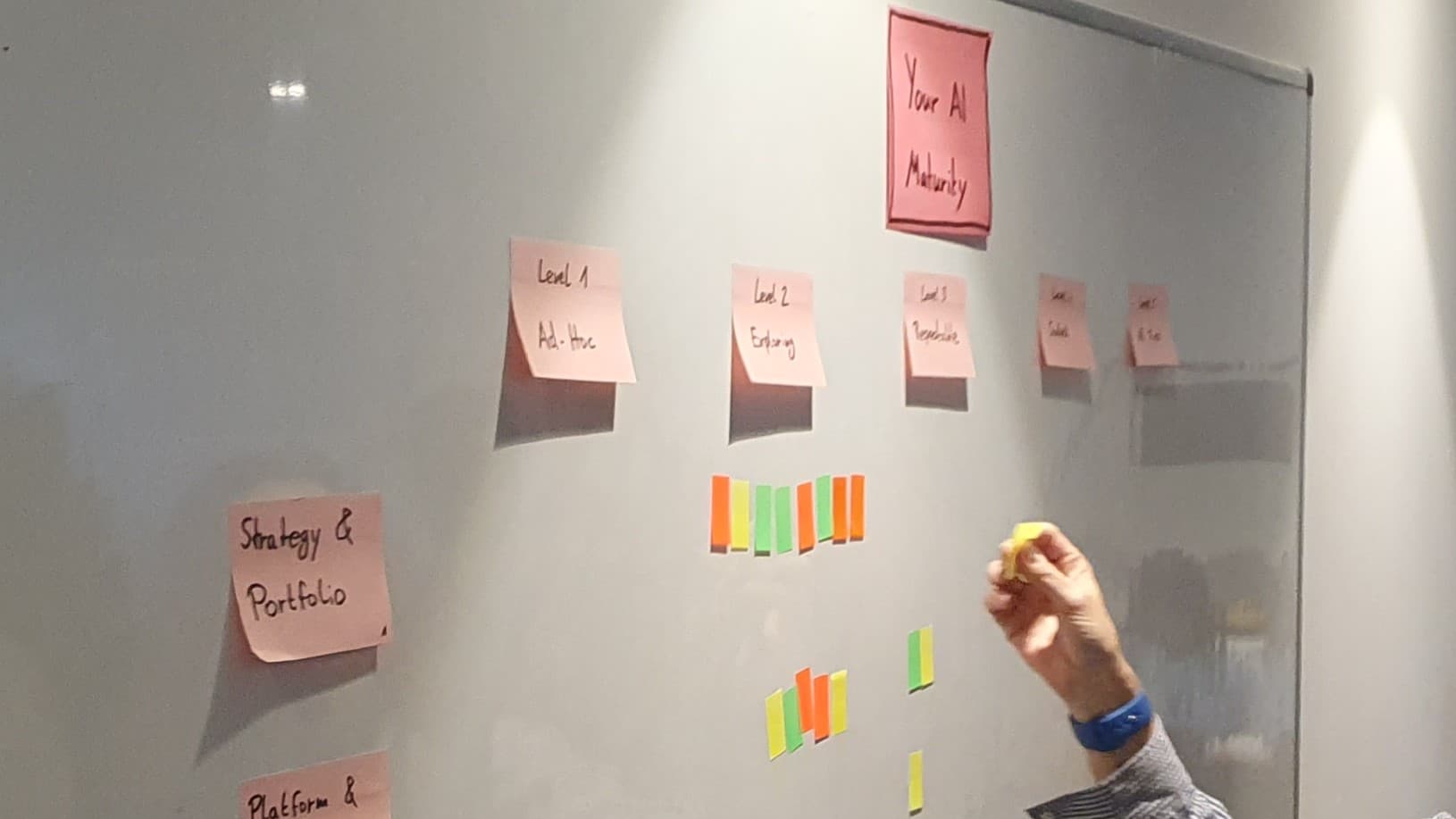
- A single Product Backlog for the organization. All identified topics were collected and prioritized in a central backlog. Each topic received a structured description, based on a “Change Canvas” that combined elements of the Lean Change Canvas with the Business Model Canvas. Urgency, stakeholders, solution approach, success criteria, and required investments were documented transparently for everyone.
- Sprints for organizational change. The topics were tackled in multi-month sprints. Each sprint began with a planning meeting in which volunteer, cross-functional teams came together around topics. At the end there were reviews and retrospectives, not for code, but for organizational improvements.
- Regular standups. In a cross-location standup format, the active topic teams shared their progress, discussed obstacles, and supported each other.
- Transparency through a Kanban board. On a board visible to everyone—initially physical, later digital—the status of all organizational development topics was traceable at any time.
- Support from a team of Agile Coaches. The role of the coaches was that of enablers: they supported the people who wanted to make a difference, from creating the Change Canvas to pitching to sponsors and management, through to implementation and final reflection. On its own, such a process would not have been sustainable.
The topics: From career path to AI
Over the years, a remarkable thematic breadth emerged:
- Career paths beyond the management track. One of the first and most enduring topics. Together with HR and the works council, a career model was developed that placed specialist careers on an equal footing with management careers. In workshops using the “World Café” method, employees outlined their ideas for dimensions of development. Among other things, this resulted in a formal contractual role for Agile Coaches and Scrum Masters, and ultimately in a new compensation model.
- Machine Learning as an innovation topic. A cross-functional team explored the use of Machine Learning for product data optimization. From the kick-off workshop through prototypes to the review, everything took place within the agile framework of organizational development.
- Distributed collaboration and virtual meetings. Even before the pandemic, the topic of cross-location collaboration was being driven forward. A comprehensive guide for virtual meetings was created, covering everything from workplace ergonomics and facilitation techniques to check-in/check-out rituals. When remote work became mandatory in 2020, this groundwork paid off.
- Leadership in the agile organization. How does the role of managers change when teams work in an increasingly self-organized way? This topic became a long-running issue and led to intense discussions at all levels.
The formats: slams, open spaces and feedback loops
In addition to the sprint-based work, additional formats were created to keep organizational development vibrant and to involve as many employees as possible:
- Result Slams. Biannual events where completed topics were presented in short, entertaining presentations, inspired by the poetry slam format. These events strengthened the visibility of the results and the feeling that change is carried by everyone.
- Open Spaces. Several Open Space conferences gave employees the opportunity to set the agenda themselves. Particularly valuable for identifying new topics and sensing the pulse of the organization.
- Surveys and feedback loops. Regular surveys, internally and with customers, served to measure effectiveness and identify new needs.
What worked and what didn’t
Not everything went smoothly. The process also had moments when topics fizzled out, energy waned, or results fell short of expectations. Some topics turned out to be too big for a sprint; others lost their urgency before they were completed. The balance between voluntariness and commitment was an ongoing issue, and it did not always succeed.
The cultural change was also not a linear path. Some of the resistances documented early on are typical for such initiatives:
- “It’s more efficient when a few people make the decisions.” The power of interdisciplinary teams was initially underestimated and had to be made tangible through concrete experiences.
- “What are managers there for, then?” Self-organized change work was partly perceived as a challenge to existing hierarchies. It took time to make it clear that it was not about abolishing leadership, but about further developing it.
- Silo mentality. Cross-location and cross-department collaboration was one of the biggest hurdles and at the same time one of the greatest levers. Connecting people across departmental boundaries proved to be one of the most sustainable effects of the entire process.
The response to this resistance was rarely confrontation, but rather inviting people in and making things tangible. Once someone had participated in a well-facilitated, interdisciplinary workshop format that led to surprising results, much less convincing was needed.
External visibility: conference talks and community work
An important aspect was exchanging with the professional community, both to share insights gained and to benefit from external input:
- Agile Saxony (2018). Organizing a community evening with around 40 participants from different companies. The keynote on the agile organizational development process led into a fishbowl discussion on cultural change, employee engagement, and the changing role of leaders.
- JUG Saxony Day (2019). A conference talk on how organizational debt can be systematically identified and addressed using agile methods.
- Other formats. From Welcome Days for new employees to presentations to advisory boards and contributions at cross-company events, many opportunities for sharing experiences were used.
Further development: from project to structure
After around five years of intensive work in sprints, an important further development was due in 2022. The process had proved its worth, but the parallel existence of various steering instruments (organizational development, strategic initiatives, OKRs) created unnecessary complexity.
A concept was developed that combined the various strands in a unified three-month rhythm: with clearly defined kick-off and closing events, prioritization by the existing leadership teams, and the retained basic idea that every employee can contribute ideas.
At some point, the process no longer needed its own program. It had become part of regular organizational governance.
What can be learned from the process
Some insights that have crystallized over the years. Not as universally valid truths, but as what worked in this specific context:
- Organizational development benefits from a product mindset. Understanding change as a continuous process, with backlog, sprints, reviews, and retrospectives, helped combine structure and flexibility. In other contexts, other frameworks may be a better fit.
- Voluntariness generates energy. The best results emerged where people engaged with a topic of their own accord. This didn’t always work, but when it did, it was significantly more sustainable than assigned responsibility.
- Networking is the underestimated lever. In retrospect, one of the greatest added values was not a single solved issue, but the fact that people from different departments, locations, and hierarchy levels started talking to each other. This networking had an impact far beyond the concrete topics.
- Formats are catalysts. Canvas formats for structured problem analysis, Open Spaces for exploration, slams for visibility: the right method at the right time made a noticeable difference.
- Resistance is information. Every form of resistance tells you something about the organization. Not fighting it, but reading it as a diagnostic signal was one of the most valuable attitudes in this process.
Conclusion
Five years of agile organizational development have shown that this approach worked well for the given situation. Not because it was perfect, but because it provided a framework in which change could be made visible, tangible, and shared by many. Its iterative nature made it possible to learn from mistakes and continuously adapt the process instead of clinging to a rigid plan.
In the end, the greatest value lay less in the individual issues that were solved and more in what emerged along the way: a network of committed people across departmental and site boundaries, a shared understanding of how change can be shaped, and an organization that has learned to continue developing itself. The fact that the process ultimately no longer needed its own program but was integrated into regular governance was not an end. It was the actual goal.
This text was created and translated with the help of artificial intelligence.

%22%2F%3E%0A%20%20%20%20%20%20%3Cstop%20offset%3D%22100%25%22%20stop-color%3D%22hsl(84%2075%25%2022%25)%22%2F%3E%0A%20%20%20%20%3C%2FlinearGradient%3E%0A%20%20%20%20%3CradialGradient%20id%3D%22wash%22%20cx%3D%2250%25%22%20cy%3D%2250%25%22%20r%3D%2250%25%22%3E%0A%20%20%20%20%20%20%3Cstop%20offset%3D%220%25%22%20stop-color%3D%22hsl(218%2075%25%2051%25)%22%20stop-opacity%3D%220.95%22%2F%3E%0A%20%20%20%20%20%20%3Cstop%20offset%3D%22100%25%22%20stop-color%3D%22hsl(218%2075%25%2051%25)%22%20stop-opacity%3D%220%22%2F%3E%0A%20%20%20%20%3C%2FradialGradient%3E%0A%20%20%20%20%3Cpattern%20id%3D%22stripes%22%20width%3D%2236%22%20height%3D%2236%22%20patternUnits%3D%22userSpaceOnUse%22%20patternTransform%3D%22rotate(6)%22%3E%0A%20%20%20%20%20%20%3Cpath%20d%3D%22M%200%2018%20L%2036%2018%22%20stroke%3D%22white%22%20stroke-opacity%3D%220.18%22%20stroke-width%3D%221.8%22%2F%3E%0A%20%20%20%20%3C%2Fpattern%3E%0A%20%20%3C%2Fdefs%3E%0A%0A%20%20%3Crect%20width%3D%221600%22%20height%3D%22900%22%20fill%3D%22url(%23bg)%22%2F%3E%0A%20%20%3Crect%20width%3D%221600%22%20height%3D%22900%22%20fill%3D%22url(%23wash)%22%20opacity%3D%220.28%22%2F%3E%0A%20%20%3Crect%20width%3D%221600%22%20height%3D%22900%22%20fill%3D%22url(%23stripes)%22%2F%3E%0A%0A%20%20%3Cg%20fill%3D%22none%22%20stroke%3D%22white%22%20stroke-opacity%3D%220.10%22%3E%0A%20%20%20%20%3Cpath%20d%3D%22M%200%20661%20C%20260%20495%2C%20570%20827%2C%20840%20661%20S%201300%20495%2C%201600%20661%22%20stroke-width%3D%222%22%2F%3E%0A%20%20%20%20%3Cpath%20d%3D%22M%200%20729%20C%20220%20608%2C%20610%20850%2C%20910%20729%20S%201320%20608%2C%201600%20729%22%20stroke-width%3D%222%22%2F%3E%0A%20%20%3C%2Fg%3E%0A%3C%2Fsvg%3E)